

;)



25 Sep 2026
Technical Control Waterborne PUA Resin: A New Solution for PET Transfer Coatings in Hot and Cold Foil Stamping
September 25, 2026
PET film is one of the most widely used carrier substrates in hot and cold foil stamping transfer processes. However, PET has inherently low surface energy and weak polarity, resulting in extremely limited adhesion of waterborne coatings to PET film, particularly when the film has not been adequately corona-treated. If coating adhesion is too strong, the foil-stamped image may be incomplete and the coating may not release cleanly. If adhesion is too weak, the coating may peel off and fail during upstream processes such as coating, printing, and rewinding. Therefore, achieving stable coating performance, precise release, and complete transfer on non-corona-treated PET film has long been a technical challenge in this application.

Technical Control has developed an anionic aliphatic waterborne PUA resin that provides a flexible and reliable solution for film ink and transfer coating applications. Its core performance advantages are particularly evident in hot and cold foil stamping applications:
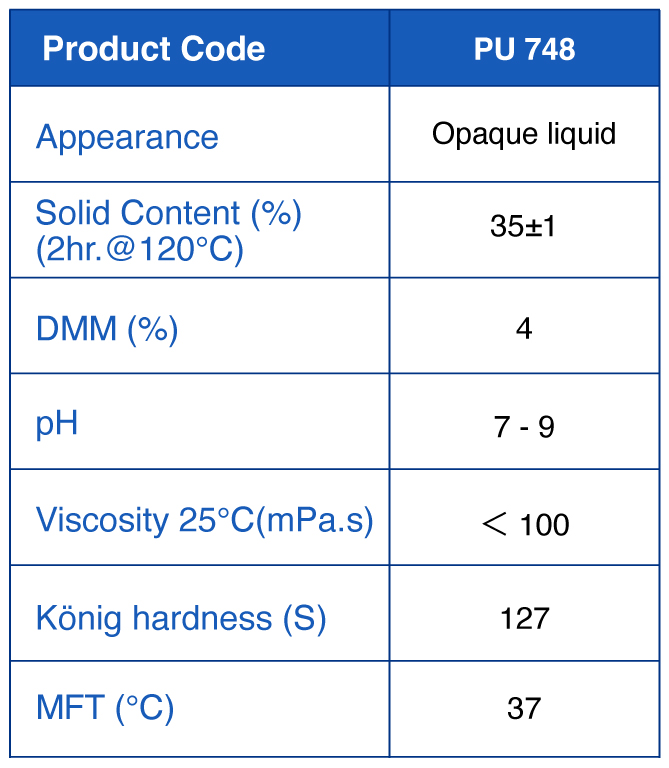
Controlled Release for Non-Corona-Treated PET Film
The molecular chains of this resin contain abundant polar groups, enabling the resin to establish stable intermolecular interactions with the PET film surface.

The interfacial bonding strength between the coating and the PET film is precisely controlled. At room temperature, the coating maintains an appropriate level of adhesion to meet the demands of the full production process, including coating, register printing, slitting, and rewinding.
During hot or cold foil stamping transfer, the adhesion decreases in a controlled manner under the combined effects of temperature and pressure. This enables graphics and text to release cleanly and completely in a single transfer step, with no ink residue or stringing.
High Transparency and Excellent Gloss
The transparency of the transfer coating directly affects the color saturation of foil-stamped graphics and the reproduction of metallic gloss
After film formation, this resin produces a clear, highly transparent, and high-gloss coating that faithfully preserves and reproduces the original colors of the ink and metallized layer. The coating also offers high hardness, excellent scratch resistance, and strong abrasion resistance, effectively protecting printed graphics from physical damage during post-processing, storage, and transportation.


In addition, the coating provides outstanding anti-blocking performance, minimizing the risk of interlayer sticking during rewinding and stacking and supporting smooth, continuous mass production.
Excellent Recoatability and Wide Processing Latitude
This resin is highly compatible with a wide range of waterborne inks and coating systems. The coated surface can be recoated or used for multi-color register printing while maintaining strong interlayer adhesion.

It helps prevent common defects such as delamination, peeling, and layer separation, giving manufacturers greater flexibility for multilayer coating structures and complex overprinting processes.
From Performance to Value: Balancing Adhesion and Release
The synergy among these three performance characteristics ultimately serves one essential purpose: helping customers achieve stable, efficient, and high-quality transfer coating production on non-corona-treated PET film.

Technical Control’s R&D team addresses the challenge at the molecular structure level, precisely regulating the interfacial behavior between the coating and the PET film. In doing so, the traditional conflict between adhesion and release is transformed into a controllable process parameter.
Customers can therefore achieve reliable release performance and consistent batch-to-batch stability without relying on corona treatment.
This is the core value Technical Control brings to transfer coating applications: leveraging its R&D capabilities to help customers simplify processes, improve yield, and expand application possibilities of hot and cold foil stamping technology.
